What is a great website? The most common answer to this question is the one that is SEO optimized, the one with a great design, strong elements, maybe some micro-interactive features, even an AI bot. All these things do make a website great, you are right.
But there is one important factor missing. Everyone who answers me this, right after hearing their answer, I ask them one more question: “So, do you think the website with all these features will rank higher in 2026?” And for anyone who answers yes, it is a direct kill shot because NO, these factors do matter, but they nowhere promise higher rankings without the most critical factor of 2026: AI optimization.
So the question becomes, how do you build an AI-Optimized website that ranks at the top of the iceberg? And the answer lies in the question itself. Let’s decode it!
So… What AI-Optimized Website Really Is?
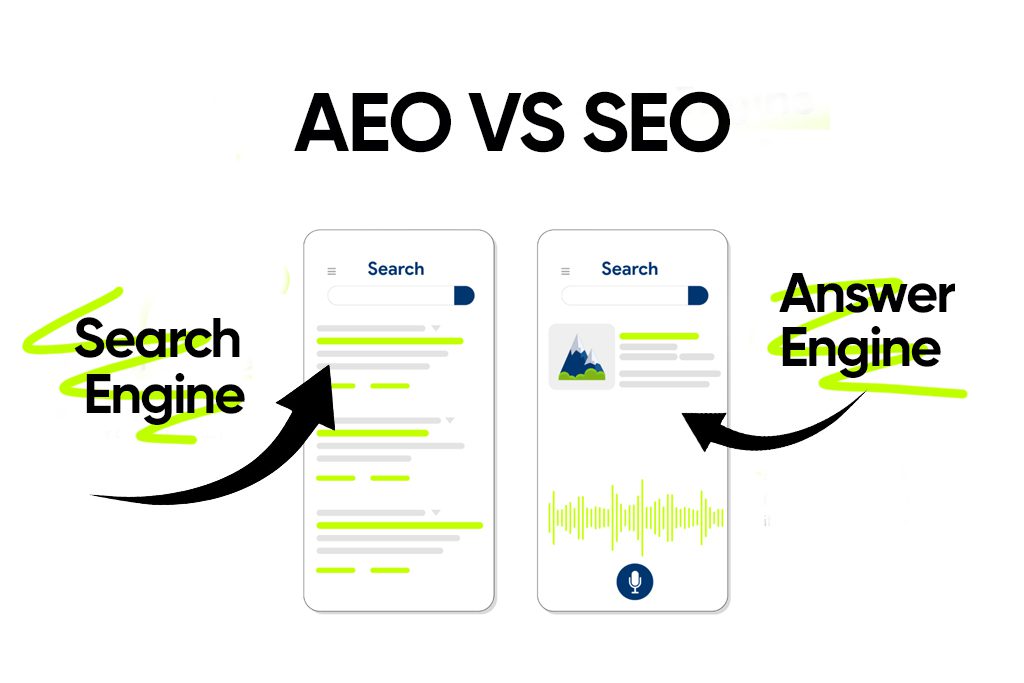
An AI-optimized website is a website designed in a way that search engines can easily read, understand, and use its content to answer user queries. Now you may ask: “Wait… SEO does the same thing, so what makes it different?”
First, I’ll call you sneaky. And secondly, yes, SEO does the same thing. But in 2026, Google and other search engines aren’t the only ones crawling your data. LLMs like ChatGPT, Gemini, Claude, and more are also scanning your content, analyzing your structure, and understanding context to decide how and where to rank you.
It’s no longer just about keywords or backlinks; these AI models read your site like a human would, looking for clarity, relevance, and value.
Earlier, websites were built to rank. Now, they are built to be selected by both search engines and large language models.
That is the main difference when discussing how to build an AI-ready website.
Instead of focusing only on keywords, you focus on:
- Clear answers
- Logical structure
- Relevant and helpful content
This shift is already visible. Studies show that over 60% of searches now end without a click. That means users are getting their answers directly from search results.
If your website is not the answer, it will be skipped.
Start With the Right Foundation: Website Architecture for AI Search
Before content, before design, before design elements, there is structure, and for better AI-optimization, it should be built into your website code. Your website’s architecture for AI search decides how easily search engines can navigate and understand your website.
Think of it like a roadmap. Your website should have:
- Clear categories and subcategories
- Logical page hierarchy
- Clean and readable URL
- Strong internal linking between pages
This is where AI SEO website structure plays a key role.
If your pages are disconnected or messy, AI struggles to understand relationships between topics. When that happens, your chances of being used in AI answers drop.
A well-structured website is also easier to crawl and index. That means your content gets discovered faster and understood better.
Write Content that AI Understands and Users Love
Now let’s talk about content, because that is what your website is made of in different shapes and sizes: content in words, content in design, content in products, content in visuals… the list goes on. And it is that same content that AI crawls.
You can have all the traffic in the world, but if your content is unclear, AI will not use it.
That is why your top priority should be writing and designing AI-friendly content structure.
Your content should:
- Answer questions directly
- Use clear headings
- Be broken into short paragraphs
- Follow a logical flow
When you think about how to build an AI-ready website, this is where most of the work happens.
A simple trick. Answer first, explain later.
This makes your content easier to extract and display in AI-generated answers, including Google snippets.
Another simple and proven way to rank higher is to write content that directly solves user queries. That kind of content, focused on problem-solving, performs better in search visibility and engagement.
Technical SEO Still Matters, Just More than Ever
Many people think technical SEO is optional. It is not. In fact, technical SEO for AI search is now more important than ever. Tech SEO includes your code optimization, mobile optimization, plugin optimization, content optimization, and more, in short, all the important ranking factors.
Moreover, AI, as well as humans, needs your website to load fast, function properly, and be easy to crawl. All this is not possible without technical optimization, including:
- Fast loading speeds
- Mobile optimization
- Clean code
- Proper schema markup
- Crawlability and indexing
Even a one-second delay in load time can reduce conversions and impact rankings. Speed is not just a performance factor. It is a visibility factor.
If your website is slow or broken, humans don’t trust it, so why will AI?
Creating a Scalable Website for AI Optimization
Your website should not just work today. It should grow with you as your business expands, your services evolve, and your content needs become more demanding over time. A scalable website for AI optimization allows you to:
- Add new content easily
- Expand into new topics
- Build authority over time
This means having:
- A blog or resource section
- Topic clusters around your main services
- Flexible page structure
Websites that regularly update and expand their content tend to perform better in search results. They show consistency, relevance, and authority.
And AI notices that.
Best Practices for AI-Optimized Websites that Work Like a Charm
If you have made it this far, you already know that building an AI-ready website is not about one flashy fix. It is about getting the basics right, consistently. With years of experience as the head of SEO, these are some of the pointers you need to follow to make your site AI-optimized:
- Keep your structure clean and logical
- Make your content easy to read and scan
- Focus on mobile-first design
- Improve page speed and performance
- Build strong internal links
- Cover topics in depth, not just surface-level
These are not complicated strategies. But when done right, they make your website far more visible in AI-driven search.
Common Mistakes That Stop Your Website From Being AI-Ready
Sometimes the problem is not what you are missing. It is what you are doing wrong.
Here are common mistakes:
- Poor structure that confuses users and search engines
- Thin content that does not answer real questions
- Ignoring technical SEO basics
- No clear content hierarchy
- Overcomplicated design that hides important information
These mistakes make it harder for AI to understand your website.
And when AI does not understand, it does not select.
Build Smart Today or Get Ignored Tomorrow
The way websites are built is changing. It is no longer about just ranking on Google. It is about being used by Google to answer questions and rank on Google, as well as LLMs.
If you want to stay visible, you need to build an AI-Optimized Website that focuses on a clean structure all around, one that offers value to the visitors.
Businesses that adapt now will have a clear advantage. Those who wait will struggle to catch up. Powering this change and leading from the front, many US-based companies, such as California Web Coders, are helping businesses stay ahead by building websites that are ready for what search has become.
Because in today’s world, if your website is not AI-ready, it’s not ready at all!