I come from the era when the World Wide Web started spreading like fire across every country, developed or developing, it did not care. Back then, nobody was thinking about how to optimize websites for Google AI Overview, because search itself was still finding its feet.
It was connecting everyone through Yahoo and MSN, and with them came search engines (one of the leading ones, and still the slowest one to date, Internet Explorer). People were talking, searching, and slowly changing the way they found information. From there started the journey of search engines answering questions.
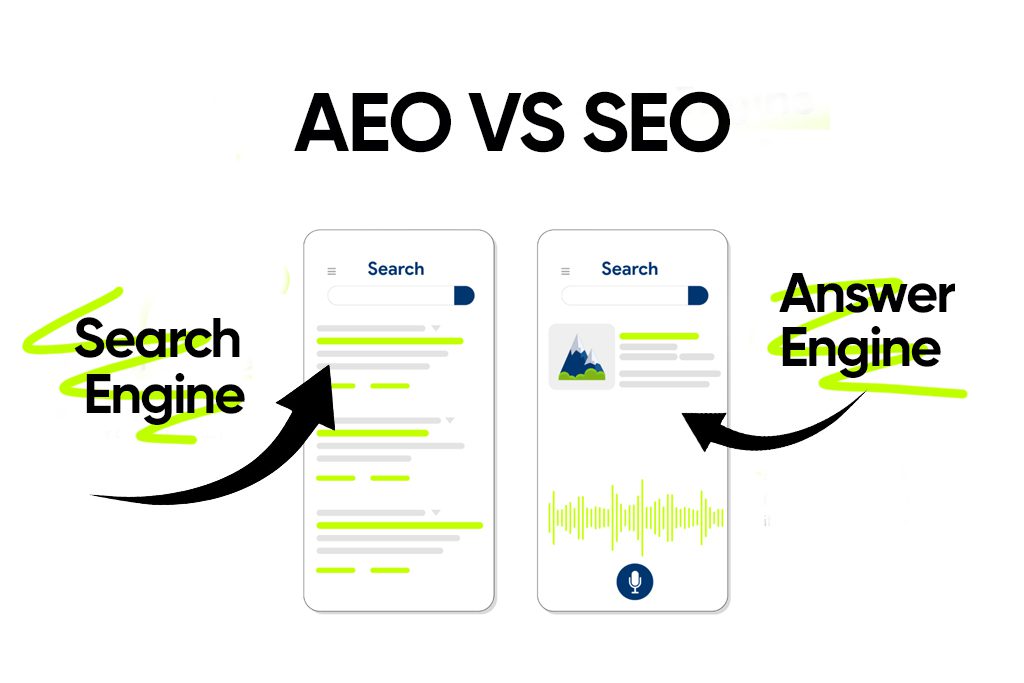
Whenever we searched for something, we had to scroll through the SERP to find our answer. That has now changed.
Google is now directly answering whatever you search through AI Overview. But those answers are still taken from other websites. What we used to do back in the day, searching for answers through dozens or even hundreds of results, Google now does for us.
Still, those answers come from websites, and the websites that get featured are the ones Google considers trustworthy. And if Google trusts them, why would others not?
But what if it were your website that Google featured in AI Overview? Just imagine the visitors, the sales, and the authority you could build with your website being mentioned by the top search engine. That is exactly what this blog is about: How to Optimize Your Website for Google AI Overview. Let’s start!y
How AI Search Is Rewriting SEO Rules
Traditional SEO was simple. Add keywords. Optimize the website a bit. Rank higher, get clicks, drive traffic. Now, things work differently.
Google AI Overview pulls information from pages it trusts and understands clearly. It is no longer about who ranks first. It is about what content is useful enough to be used in an answer. Remember the concept of E-E-A-T (Experience, Expertise, Authoritativeness, and Trustworthiness)? No matter how much people say that concept has become obsolete, in my expert opinion, Google still uses it.
This is where Google AI Overview optimization comes in.
Keyword stuffing no longer works… at least not on its own. Long paragraphs filled with fluff do not work either… they never did if I’m being honest.
Instead, Google is looking for:
- Correct answers that solve problems
- Strong relevance to the query
- Trustworthy information
- Well-structured content
To put this into perspective, Google processes over 8.5 billion searches every day according to Statista. That means competition is massive, and only the clearest, most helpful content gets picked.
How to Rank in Google AI Overview Without Guesswork
Now, let’s get to the golden question; the one everyone’s curious about: how to rank in Google AI Overview?
As an expert, I can not answer this question. Why? Because the question is wrong!
You do not “rank” in the traditional sense. You get selected. So, the question now becomes: how to get selected in Google AI! And the answer for that is:
Google chooses content based on four main factors:
- Relevance
- Authority
- Clarity
- Structure
To become the chosen one, start with these basics:
- Give concise answers right away
- Match exactly what the user is searching for
- Add context to support your answer
For example, instead of writing a long introduction, answer the question first. Then explain it.
This approach aligns perfectly with how AI reads and extracts information.
Structure Is Everything: Build Content AI Can Understand
You can have great information. Your stats are on point. The words are mesmerizing. But if it is messy, AI will skip it, and so will Google!
That is why structured content for AI search matters more than ever.
Think of your content like a clean outline:
- Use clear headings
- Break text into short paragraphs
- Add bullet points where needed
- Keep everything easy to scan
When your content is organized, AI can quickly understand it and pull relevant parts.
Also, consider using schema and logical formatting. It helps search engines connect different parts of your content.
According to Search Engine Journal, pages with structured data can see up to 30 percent higher click-through rates. That shows how powerful structure really is.
Write Like You Talk, Only Smarter. AI Loves That Kind of Content
Here is where most people go wrong. They either write too robotically or too vaguely. Yes, ChatGPT has made writing easier, but then again, easier doesn’t mean better right?
If you want strong content optimization for AI search, your content needs to feel natural but still be clear and direct.
Focus on this approach:
- Answer first, explain later
- Use simple language
- Avoid unnecessary fluff
- Write like you are explaining something to a real person
And the most important one: WRITE YOURSELF!
Also, include natural variations of your keywords. Do not force them. Let them flow with the content.
This makes your content easier for both users and AI to understand.
Optimize for AI Answers, Not Just Keywords
There is a big difference between writing for keywords and writing for answers. To truly optimize a website for AI answers, you need to go deeper.
This includes:
- Adding context to your content
- Covering the topic from multiple angles
- Building topic clusters around your main subject
According to Backlinko, long-form content gets 77 percent more backlinks. That shows how depth and value increase visibility and trust.
Google is not just looking for isolated pages anymore. It is looking for websites that show expertise across a topic.
This is where entity-based SEO and topical authority come into play.
Google AI Search Ranking Factors You Cannot Ignore
The game is all about ranking, and if you want to stay visible, you need to understand Google AI search ranking factors, starting with the biggest one: TRUST.
Google looks at:
- Experience and expertise
- Authority of your website
- Trustworthiness of your content
- Fresh and updated information
- Strong internal linking
This is often referred to as E E A T (the concept people think is obsolete, but is it?)
Another important point. According to Ahrefs, 90 percent of pages get no organic traffic. That is a strong reminder that most content goes unnoticed, except for the ones that follow E-E-A-T.
The Secret Sauce: How to Get Featured in AI Overviews
If you’ve followed me this far, man, you’re clearly serious about stepping up your game. Here’s a simple checklist to guide you through the process of appearing in the AI Overview:
- Answer specific questions clearly
- Use clean and structured formatting
- Add credible data and examples
- Build authority around your topic
- Keep your content updated
Think of it this way. Google is trying to give users the best possible answer. Your job is to make that choice easy.
Rank Higher and Let Your Competitors Play Catch-Up
AI search is not a trend. It is the direction Google is moving toward.
The sooner you adapt, the better your chances of staying visible.
Businesses that focus on structured, helpful, and trustworthy content will dominate this space.
Because waiting is no longer an option.
Become the Answer
SEO is no longer just about getting clicks. It is about becoming the source Google trusts.
If you focus on clarity, structure, and real value, your chances of being included in AI answers increase.
The shift has already started. The only question is whether your website is ready for it.
Now is the time to adapt, refine, and position your content where it actually matters.