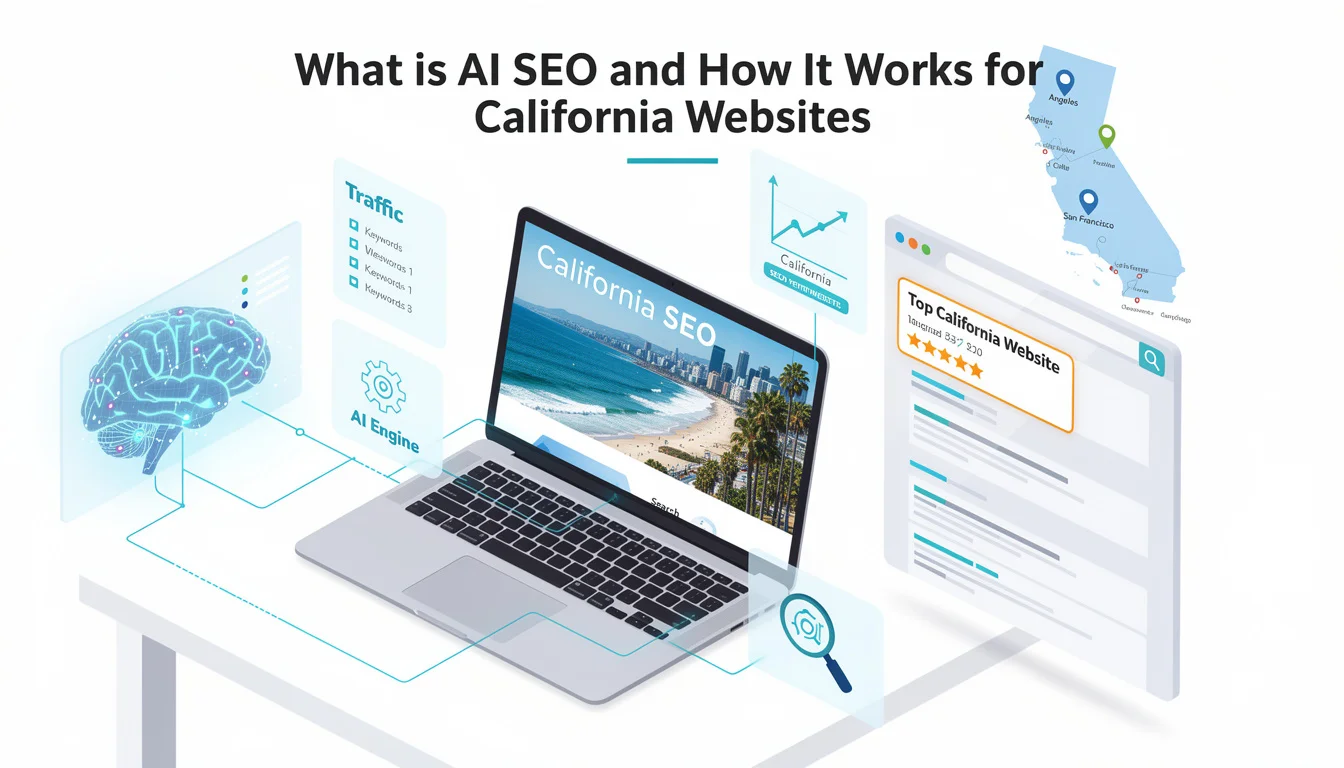
Quick answer: SEO (search engine optimization) helps your pages get found, crawled and ranked in search results. AEO (answer engine optimization) shapes your content so search engines, voice assistants and AI tools can quote it as a direct answer. They are complementary: SEO builds discoverability and trust, while AEO makes specific passages easy to extract and cite.
Why Is Search Changing?
People increasingly ask full questions and get summarized answers from Google AI Overviews and AI Mode, Bing Copilot, ChatGPT search, Perplexity and voice assistants. Brands now need to be both findable and quotable. Google says there are no special requirements for its AI features: pages must be indexed, snippet-eligible and genuinely helpful, which is why SEO remains the foundation.
What Is SEO?
SEO is the process of optimizing your website and content so that it ranks well on search engine results pages and earns organic traffic. Its main components are:
- Keyword and intent research: matching what people search for
- Technical SEO: speed, mobile usability, crawlability, indexing and structured data
- On-page SEO: titles, meta descriptions, headings and internal links
- Off-page SEO: backlinks, mentions and brand reputation
- Content strategy: helpful, original pages that satisfy users
Even as AI changes search, SEO ensures your website is visible, indexable and credible.
What Is AEO?
AEO optimizes content for answer engines: Google AI Overviews, Bing Copilot, ChatGPT, Perplexity and voice assistants such as Siri and Alexa. Instead of only trying to rank a page, AEO helps the right passage on that page get cited or featured within an answer. When someone asks "What are the best web design practices?", AEO ensures your content can be part of the response. You may also see the terms GEO (generative engine optimization) and AI SEO used for the same idea.
Core elements of AEO
- Answer-first content: clear, concise, factual answers under question headings
- Semantic clarity: structure that machines can interpret, with related terms and entities
- Accurate structured data: optional, but helpful for interpretation
- Conversational tone: natural phrasing for voice and chat queries
- Authority: trustworthy, sourced information and visible expertise
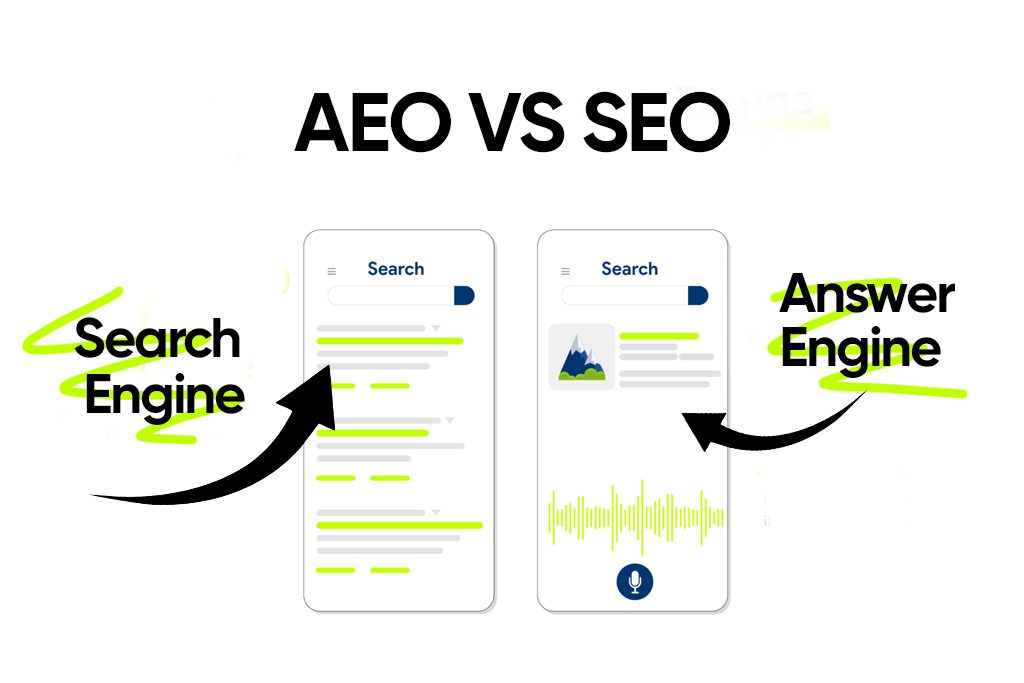
SEO vs AEO: What Are the Key Differences?
| Aspect | SEO | AEO |
|---|---|---|
| Goal | Rank pages on search engines | Get cited in AI and voice answers |
| Focus | Keywords, links and technical health | Questions, context and clear answers |
| Content style | Comprehensive pages | Concise, factual, answer-first sections |
| Platforms | Google and Bing results | AI Overviews, Copilot, ChatGPT, Perplexity, voice |
| Measurement | Rankings, clicks and traffic | Impressions, citations, branded searches and leads |
| Methods | Metadata, backlinks, headings | Direct answers, structure, entities, schema |
Why Does AEO Matter?
- Users ask natural-language questions instead of short keywords
- AI tools favor structured, context-rich, trustworthy content
- Voice assistants need clear, authoritative answers
- Being cited builds brand awareness and trust before a click
How Do SEO and AEO Work Together?
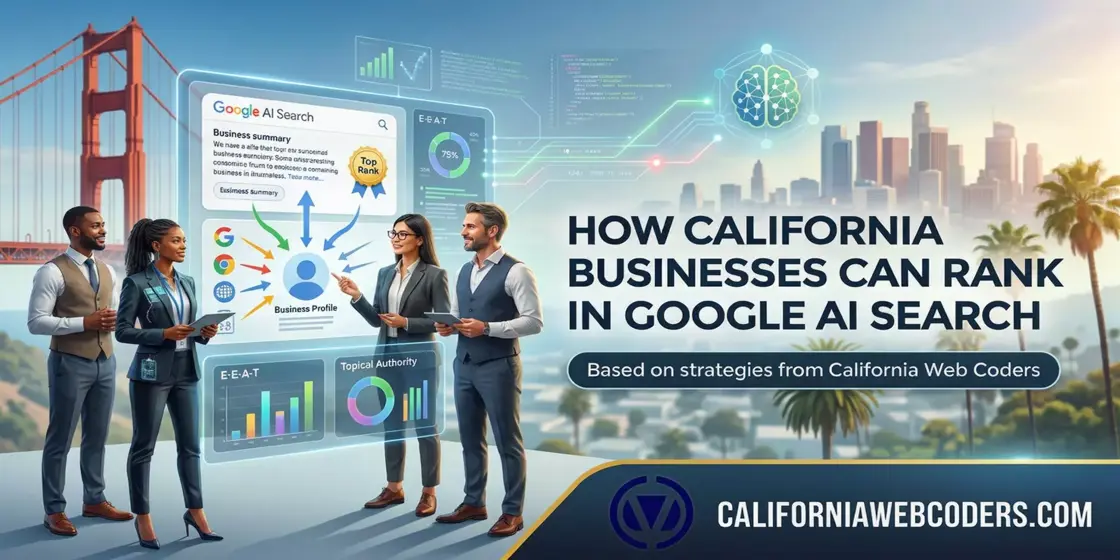
They are not competitors. SEO ensures your site is crawlable, authoritative and well ranked. AEO ensures your content is easy to extract and quote. For example, a strong page on "web design trends in California" (SEO) with a direct answer at the top, FAQs and clear sections (AEO) can rank in Google and be cited in AI answers. Learn more about AEO for California businesses.
How Do You Prepare Your Content for AEO?
- Write answer-based content. Begin sections with a direct response.
- Add FAQ sections. Even though Google retired FAQ rich results, they help readers and AI tools find short answers.
- Use accurate structured data. Schema.org markup helps systems interpret content, though it is not required.
- Write conversationally. Use clear, natural language.
- Build topical authority. Publish expert, well-sourced content that covers related questions.
- Optimize for entities. Mention brands, places and concepts clearly and consistently.
- Measure. Use Search Console and analytics, and check whether AI tools cite you. Google reports AI feature traffic in the "Web" search type.
What Is the Future of SEO and AEO?
The two disciplines are converging. Traditional SEO is still crucial, but it is no longer enough on its own. Brands that combine SEO's technical structure with AEO's clear, conversational answers will be best placed for AI-driven discovery.
Conclusion
SEO helps your content get found, and AEO helps it get chosen. California Web Coders offers SEO services and AI-ready content strategy for businesses that want to stay visible whether users type a keyword or ask an AI assistant. Contact us to get started.